
North Carolina Budget Impact on High Country Childcare Industry and Business Community
After more than a year of negotiations, North Carolina has a 2026-27 State Budget! Signed into law on July 7, 2026, it is the state's first full budget in more than two years, and it touches several areas that matter to High Country businesses, from childcare to transportation. No budget is perfect, and this one is no exception. Still, it moves several priorities forward, including a number the Boone Area Chamber of Commerce has advocated for through the work of our Advocacy Task Force.
In May 2026, twenty members of the High Country business community traveled to Raleigh as part of a group of 85 businesses and Chamber representatives from Western North Carolina, to advocate specifically to the NC General Assembly and state agency partners on issues impacting the entire region, especially early childcare policy. The collective voice resonated with the NC General Assembly, producing a budget victory that has been years in the making. It also shows the value of advocacy and cooperation when communicating the needs of the residents and businesses of High Country.
The work is not complete! It's possible for two things to be true in the budgeting process: to have items that make you search for confetti and streamers and to have items, or the lack of inclusion of items, that have you running for the nearest trashcan.
The united voice of a community makes the most impact when it is consistent and rooted in data and facts. Decisions are made by people who show up and stay engaged throughout the process. We are thankful to the members of our Advocacy Task Force and the countless local business leaders and industry professionals who inform our work across our entire advocacy platform. We will continue to work toward efforts that support our member-informed policy agenda, and look forward to continuing the work to advance goals at the local, state, and federal levels. We invite your feedback and participation in the process, as this work truly never ends.
David Jackson
Boone Area Chamber of Commerce
President/CEO
Childcare Subsidy Funding
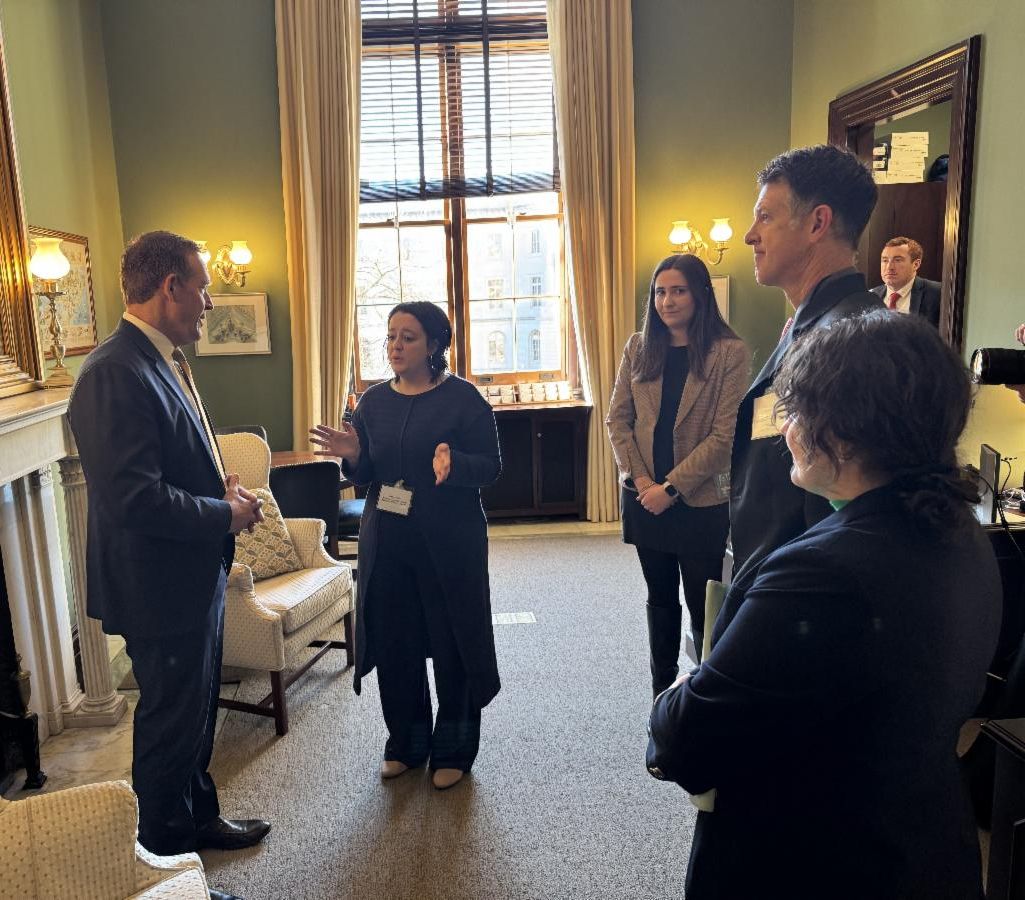 BACC 2026 Legislative Priority: Funding for efforts related to childhood development, including a statewide floor for early childcare subsidies, increased public school teacher pay and investment, and enhanced opportunities for after school care.
BACC Guiding Principle: We support policies that expand and strengthen the local workforce by ensuring access to attainable housing, affordable child care, and high-quality education and training pathways that allow workers to live, learn, and build careers in the community.
Over the last several years, businesses across Western North Carolina have rallied to support the early childhood industry as a key economic development priority. The Boone Area Chamber of Commerce Foundation continues active fundraising for projects in this space, including achieving full-funding for Pathways to Accreditation, and our recently announced one-time retention bonus for teachers in early childcare centers. The business community's support of early childcare policy was an important catalyst in the establishment of the first-ever statewide subsidy floor for reimbursement rates paid to childcare centers.
The subsidy floor, recommended by the bipartisan NC Task Force on Child Care and Early Education, matters most in places like the High Country. Rates have long varied widely by county, leaving many rural providers reimbursed far less than their urban counterparts for the same care. This will help to close the gap and give local providers stability to keep classrooms open and staff in place. We are excited to note that licensed care centers in Watauga County will see one of the most significant subsidy adjustments of any county in the state based on this budget provision.
The need still outpaces the funding. Waitlists for subsidized care have grown sharply across the state over the past year, and this investment addresses one piece of a larger access challenge. It is progress worth recognizing, with more work ahead.

Hurricane Helene Recovery
BACC 2026 Legislative Priority: Continued Hurricane Helene recovery efforts, including investments in critical infrastructure and economic recovery.
BACC Guiding Principle: We support investments in a strong and reliable infrastructure network, including transportation, water and wastewater, energy reliability, and broadband, to ensure that businesses can operate efficiently, reduce vulnerability to natural disasters, and enable responsible growth across the High Country.
The budget sets aside more than $700 million for continued Hurricane Helene recovery, the state's sixth relief package since the storm. The largest share, $450 million, covers North Carolina's required match for federal disaster recovery programs. The rest supports local government projects, nonprofit and volunteer rebuilding groups, temporary housing assistance, and repairs to private roads and bridges. For the High Country, where recovery is still underway nearly two years after the storm, this remains one of the most consequential parts of the budget for local businesses and homeowners alike.
This package brings the North Carolina General Assembly's total Helene relief to more than $3 billion. The work across the Governor, the General Assembly, and the state's Congressional Delegation has kept the focus on the needs of the communities, residents, and businesses that make Western North Carolina what it is, rather than on politics. As communities await expense reimbursements, residents navigate housing repairs, and businesses absorb disaster costs in an uncertain economy, the Chamber has recognized Senator Ted Budd's efforts to keep Congress informed on the region's needs.
Pay Increases for Teachers and State Employees
BACC Guiding Principle: We support policies that expand and strengthen the local workforce by ensuring access to attainable housing, affordable child care, and high-quality education and training pathways that allow workers to live, learn, and build careers in the community.
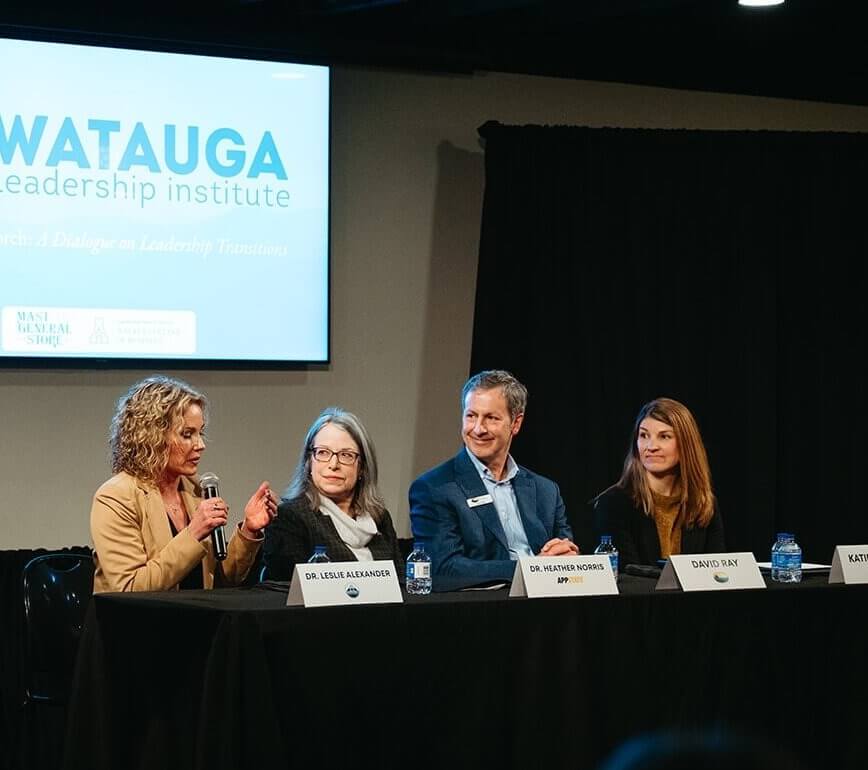
State employees will receive a 3% raise, with a one-time bonus of $1,750 for those earning $65,000 or less and $1,000 for those earning more. Teachers will see an average 8% salary increase, with the largest raises going to early-career educators and starting pay rising to $48,000 before bonuses and local supplements. Appalachian State University and Watauga County Schools are among the county's largest employers, these state-set raises reach a significant share of the local workforce directly. For Boone area businesses competing for talent in a tight labor market, that makes them worth watching. Public sector pay shapes the broader wage landscape across the region.
While this raise is a notable step in the right direction, North Carolina has more work to do in funding teacher pay increases in a manner that's consistent with private-sector wage scale growth. There are not many businesses in our community that cap wage growth for years at a time, and then expect to retain that same staff. The Boone Area Chamber of Commerce Advocacy Task Force supports the Education is Everyone's Business platform, and encourages local employers to consider the future workforce training ramifications that come from under investment in local public schools, their teachers, and staff.
Community College Funding and Propel NC
BACC 2026 Legislative Priority: A community college system focused on providing instruction in high-demand fields by beginning implementation of Propel NC.
BACC Guiding Principle: We support policies that expand and strengthen the local workforce by ensuring access to attainable housing, affordable child care, and high-quality education and training pathways that allow workers to live, learn, and build careers in the community.

The state's community colleges will see one of their largest funding increases in recent years, including $99 million to fully fund enrollment growth and $57.5 million in recurring funds to modernize Propel NC, a funding model that ties resources to workforce needs in high-demand fields. Faculty and staff will receive the same 3% raise as other state employees, and the budget adds recurring support for ApprenticeshipNC.
Locally, this work runs through Caldwell Community College and Technical Institute, which serves the area through its Watauga campus. Its RISE Caldwell-Watauga (Regional Initiative for Skilled Employment) connects high school students to apprenticeships and work-based learning with area employers in high-demand fields such as health care, manufacturing, hospitality, and trades. State investment in enrollment growth and apprenticeships supports exactly this kind of local pipeline between education and the regional workforce.
Transportation and Road Funding
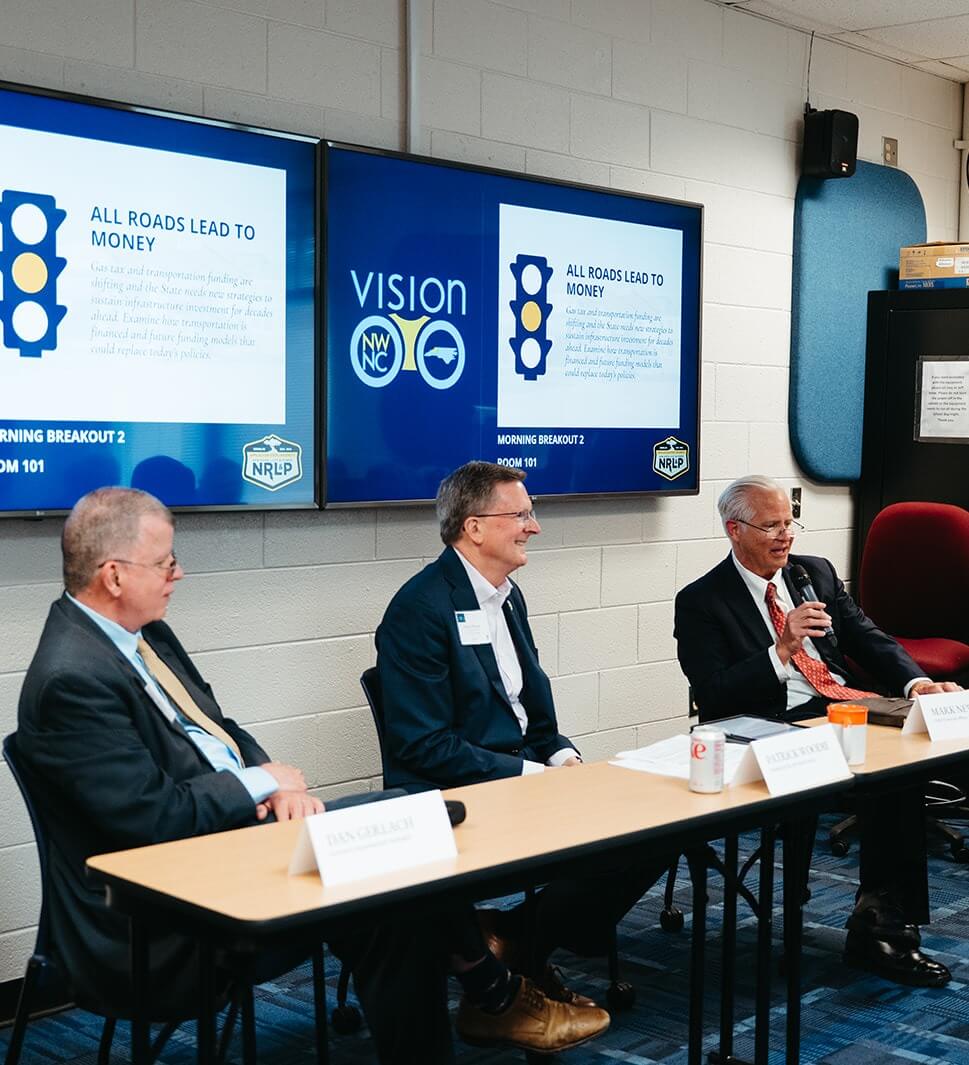
BACC 2026 Legislative Priority: Additional revenue for road construction to address the declining motor fuel tax in order to fulfill the delivery of STIP projects.
BACC Guiding Principle: We support investments in a strong and reliable infrastructure network, including transportation, water and wastewater, energy reliability, and broadband, to ensure that businesses can operate efficiently, reduce vulnerability to natural disasters, and enable responsible growth across the High Country.
Transportation funding also gained ground. The budget adds $122 million to the Highway Trust Fund for the State Transportation Improvement Program, the state's 10-year project plan, and roughly $216 million to the Highway Fund, along with recurring maintenance dollars. The budget also directs $16.4 million and 65 new positions to the Division of Motor Vehicles to expand office hours and add license offices, a practical improvement for residents and employers who depend on those services.

Environmental Resilience
BACC 2026 Legislative Priority: Environmental resiliency, including investments in streambank restoration.
BACC Guiding Principle: We support policies that protect and enhance the region’s quality of life, including outdoor recreation, environmental stewardship, and community amenities because these assets strengthen our workforce, attract investment, and define what makes the High Country an exceptional place to live and work.
The budget also invests in environmental resilience. It includes $20 million for the NC Dam Safety Grant Fund to repair or remove high-hazard dams damaged by Hurricane Helene, along with funding for landslide hazard mapping.
The budget also supports the outdoor recreation economy the region relies on, dedicating about $15 million to the State Trails Program and related trail work. That total includes $13.7 million split between the Great Trails State Program, which provides grants to communities to develop, improve, and connect our state's trails and greenways, and the Complete the Trails Program, which funds authorized State Trails. Another $60,000 in capacity-building grants will strengthen the nonprofit organizations that help steward and develop the state's signature trail corridors. For a region whose economy depends on outdoor recreation and tourism, these are practical investments in both quality of life and business activity.
Several funded projects sit close to home, including:
|
|
Looking Ahead
The budget does not resolve every challenge, and the Boone Area Chamber and its Advocacy Task Force will continue advocating for the priorities in its Legislative Agenda as implementation moves forward.
That work is made possible by the Chamber's Advocacy Champions, a group of businesses whose financial support funds efforts like the Legislative Breakfast, the Policy & Pints series, and annual legislative visits to Raleigh and Washington, D.C. We are grateful for their investment in the region's business voice.
The state budget is one layer of a larger economic picture. For more on the local landscape, see this article Understanding Local Government Taxes and quarterly Economic Indicators reports.